School admin? Schedule a demo

Strategy-Based Maths Facts Practice Online that Builds True Fluency

MathFactLab moves beyond rote memorization and drill. Our conceptual approach—powered by visual models—helps students develop lifelong mental computation skills and basic fact proficiency.

A Different Kind of Number Facts Website

There are dozens of maths facts programs on the market, but almost all rely on the same ineffective method: rote memorization through drill. MathFactLab is different. Created by a teacher and backed by leading researchers, our online practice builds true fluency through reasoning strategies and sense-making.
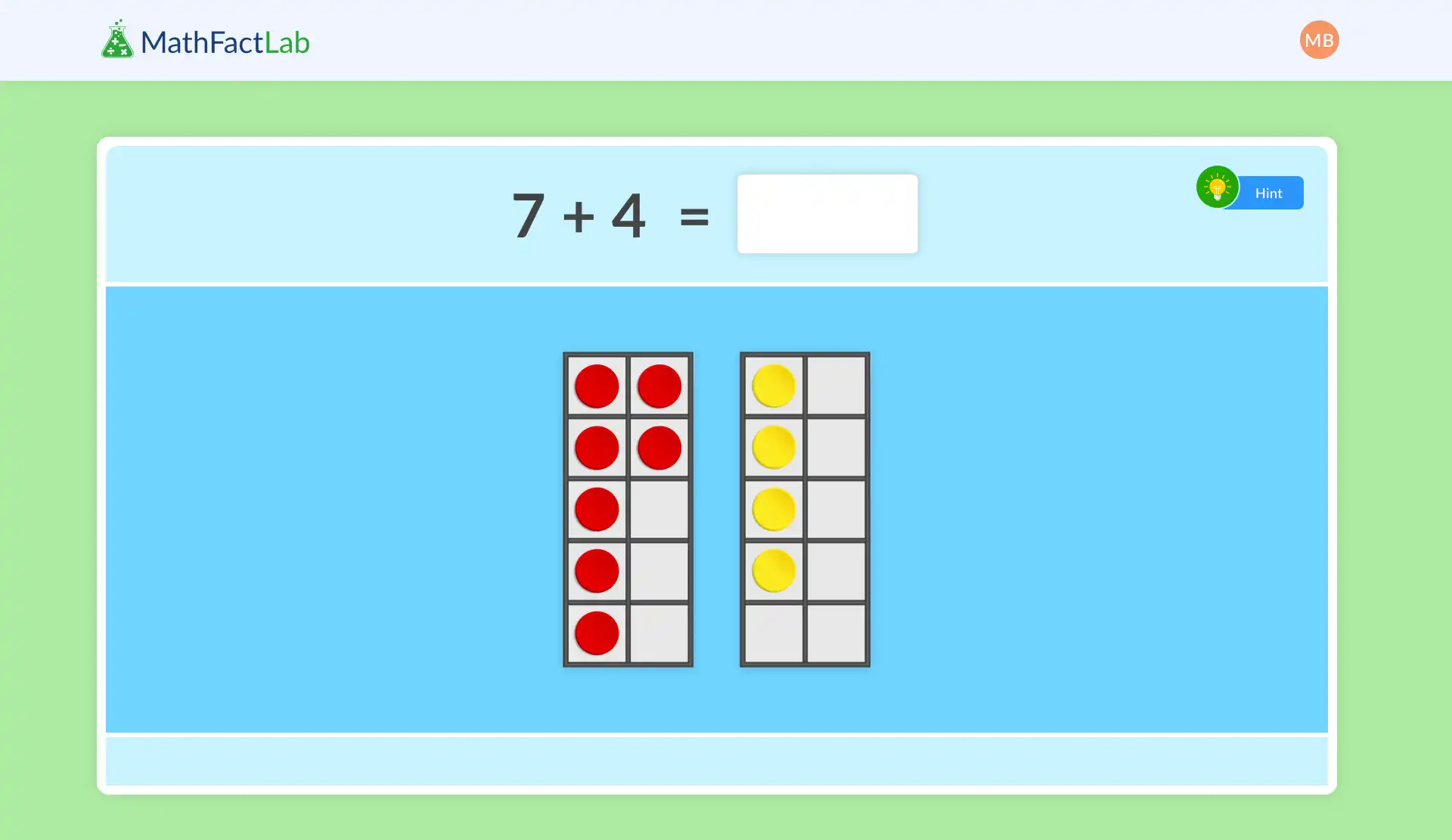
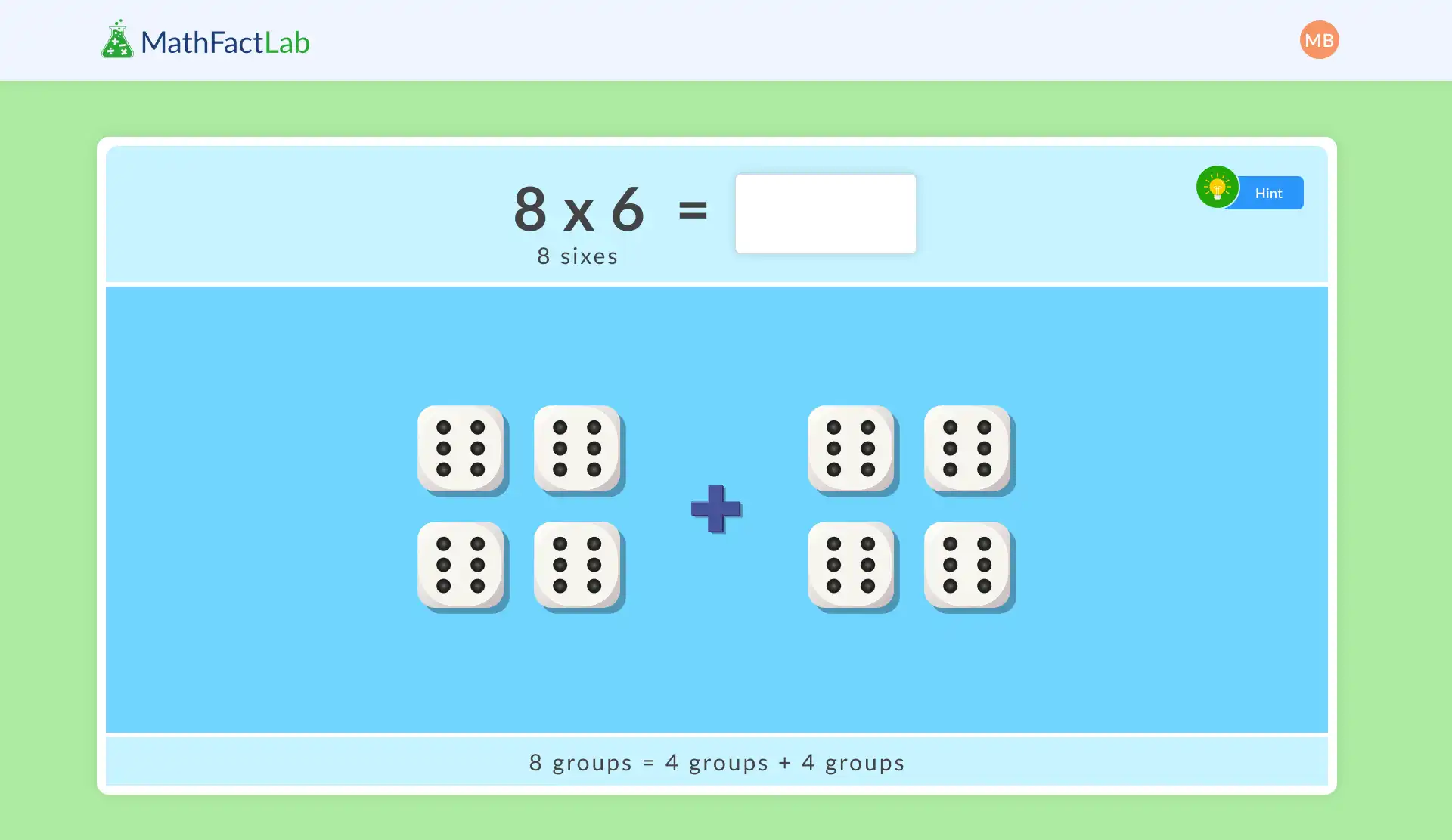
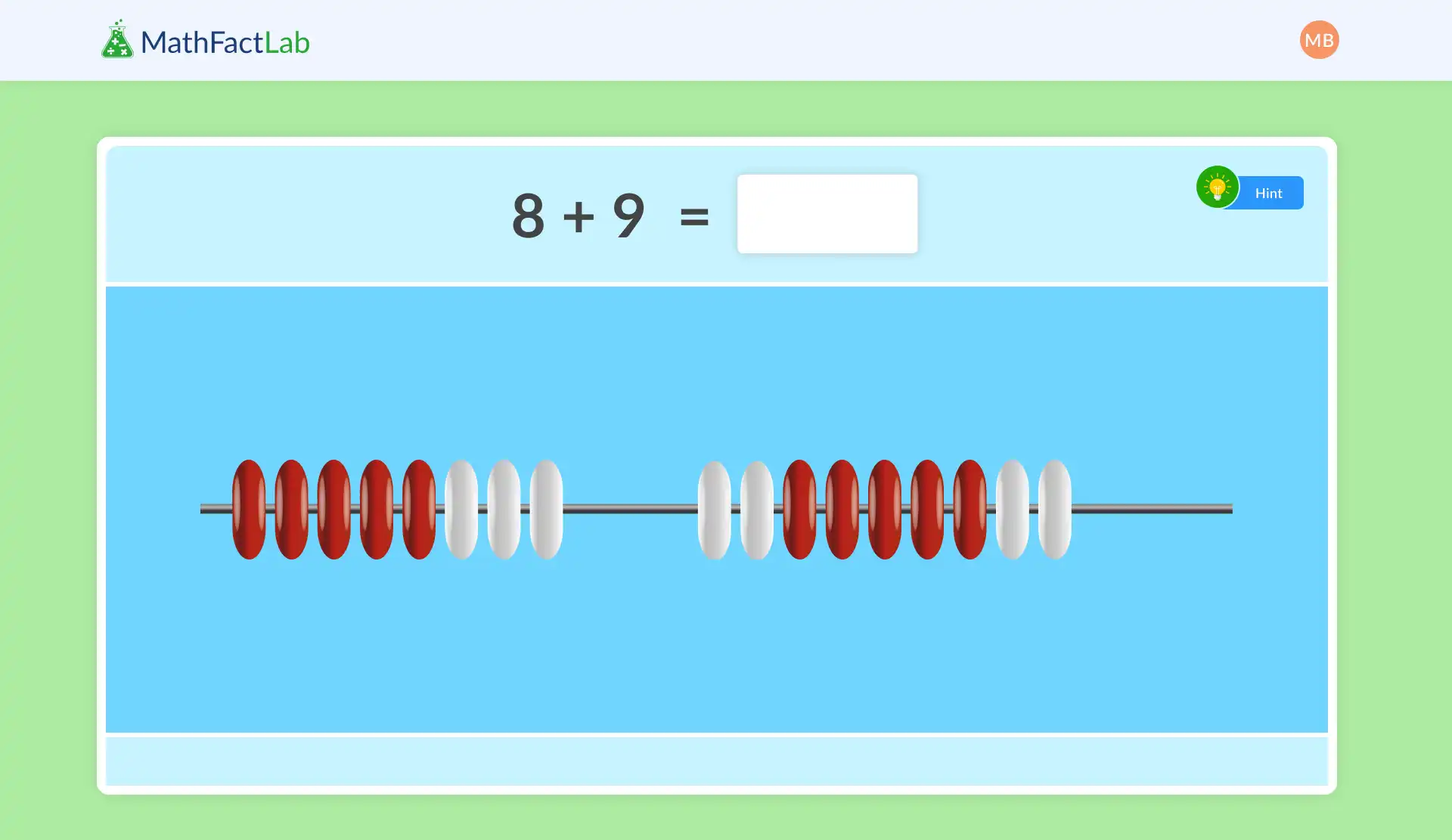
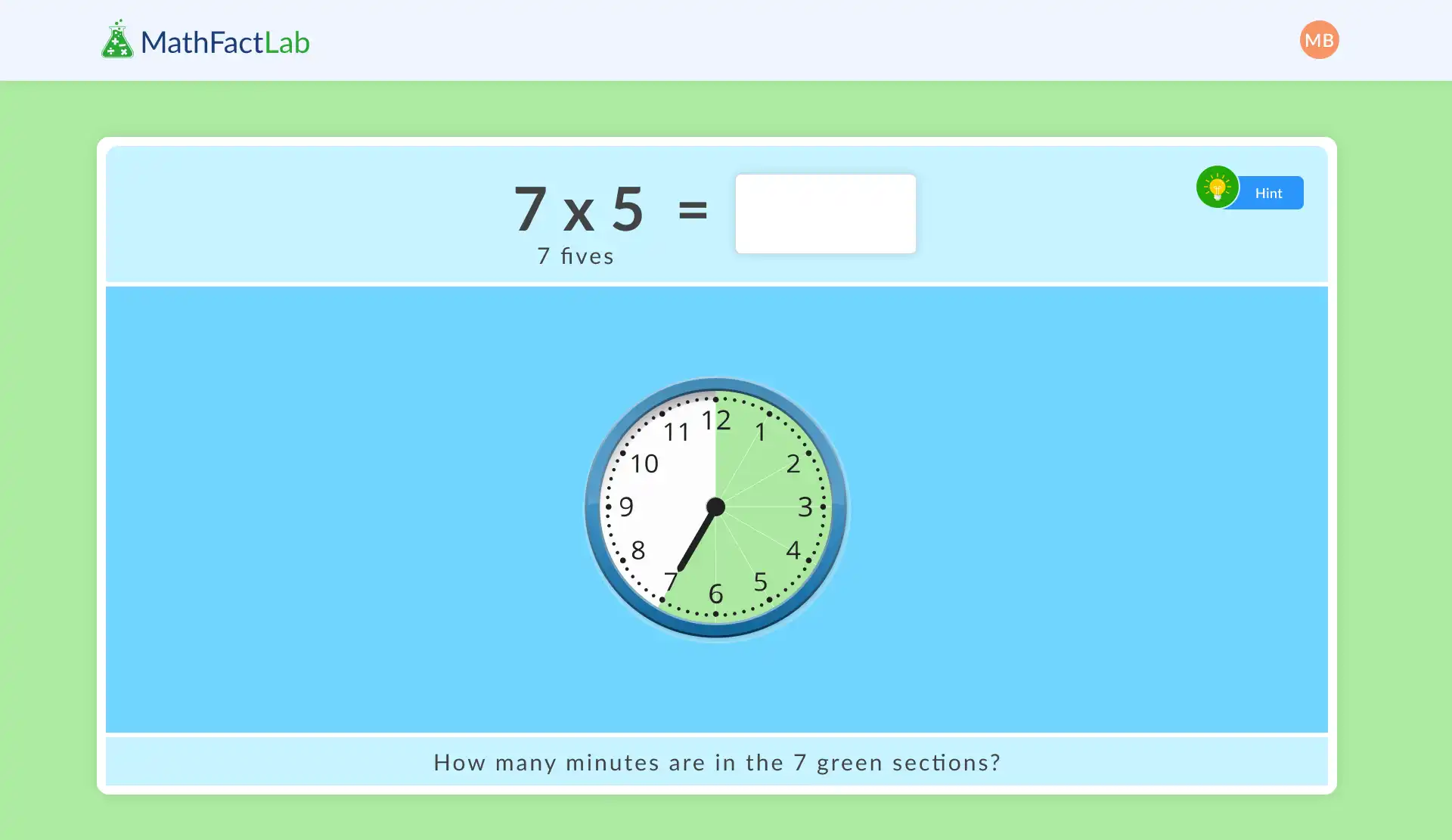
MathFactLab students are not asked to blindly memorize facts. Instead, by engaging with multiple visual models—such as number lines, area models, bar diagrams, ten frames, dice, and clock faces—our students enhance their number sense as they construct a deep understanding of basic number facts.
Addition number fact modeled with ten frames.
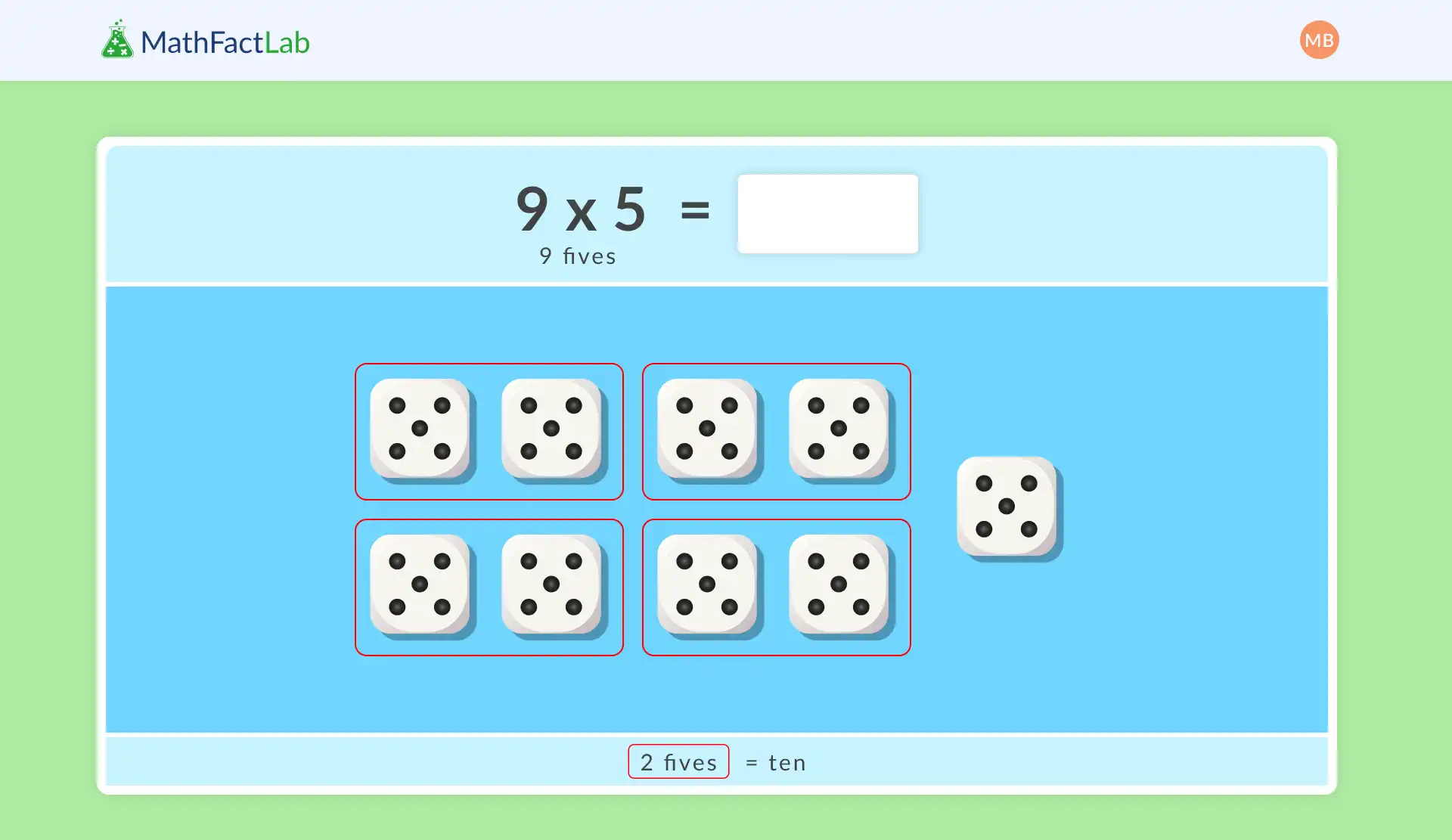
Multiplication maths facts modeled with dice.
Addition maths facts modeled with rekenrek beads.
Multiplication number fact 5 timestable modeled on a clockface.
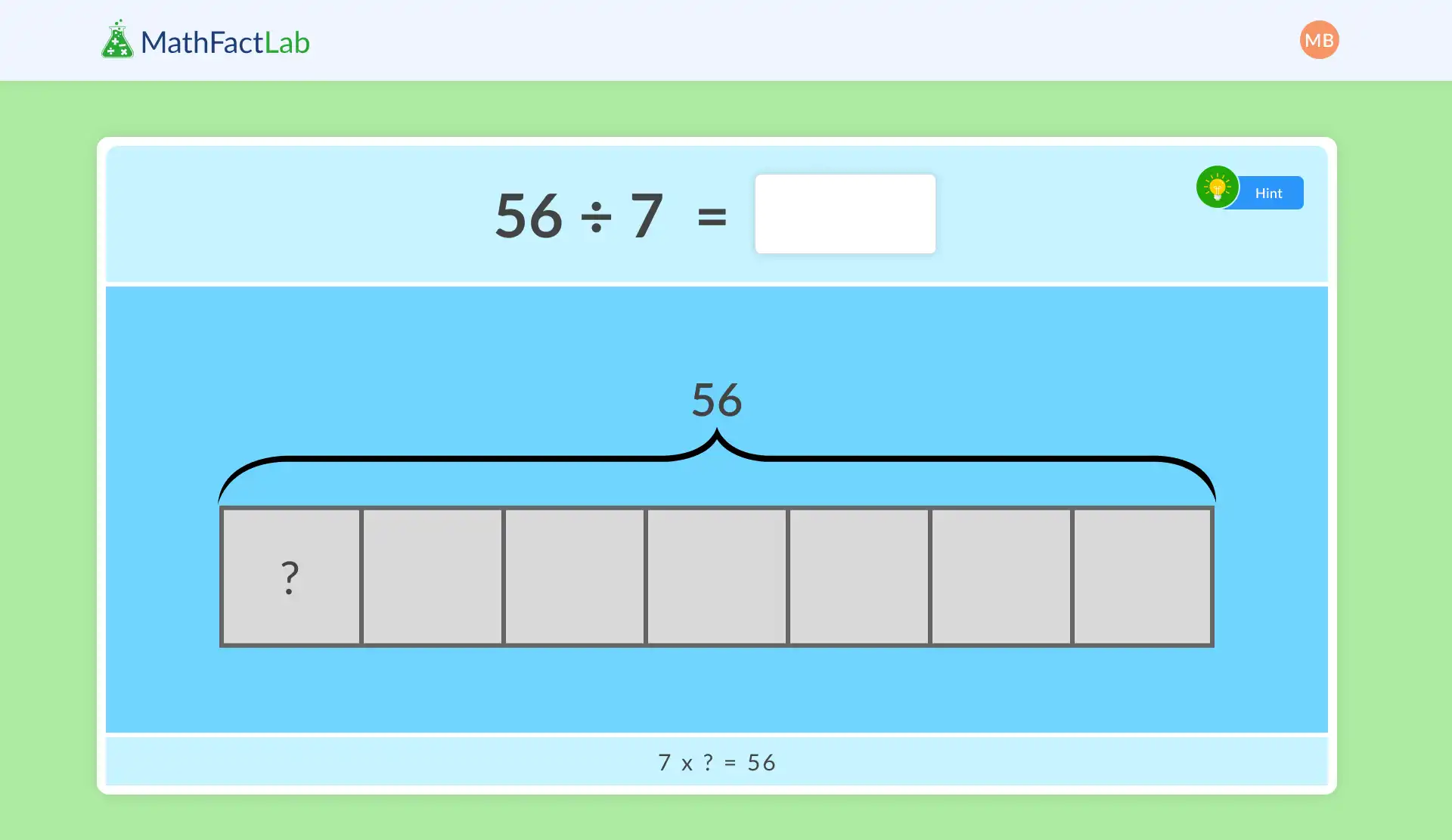
Division number fact modeled with a bar or tape diagram.
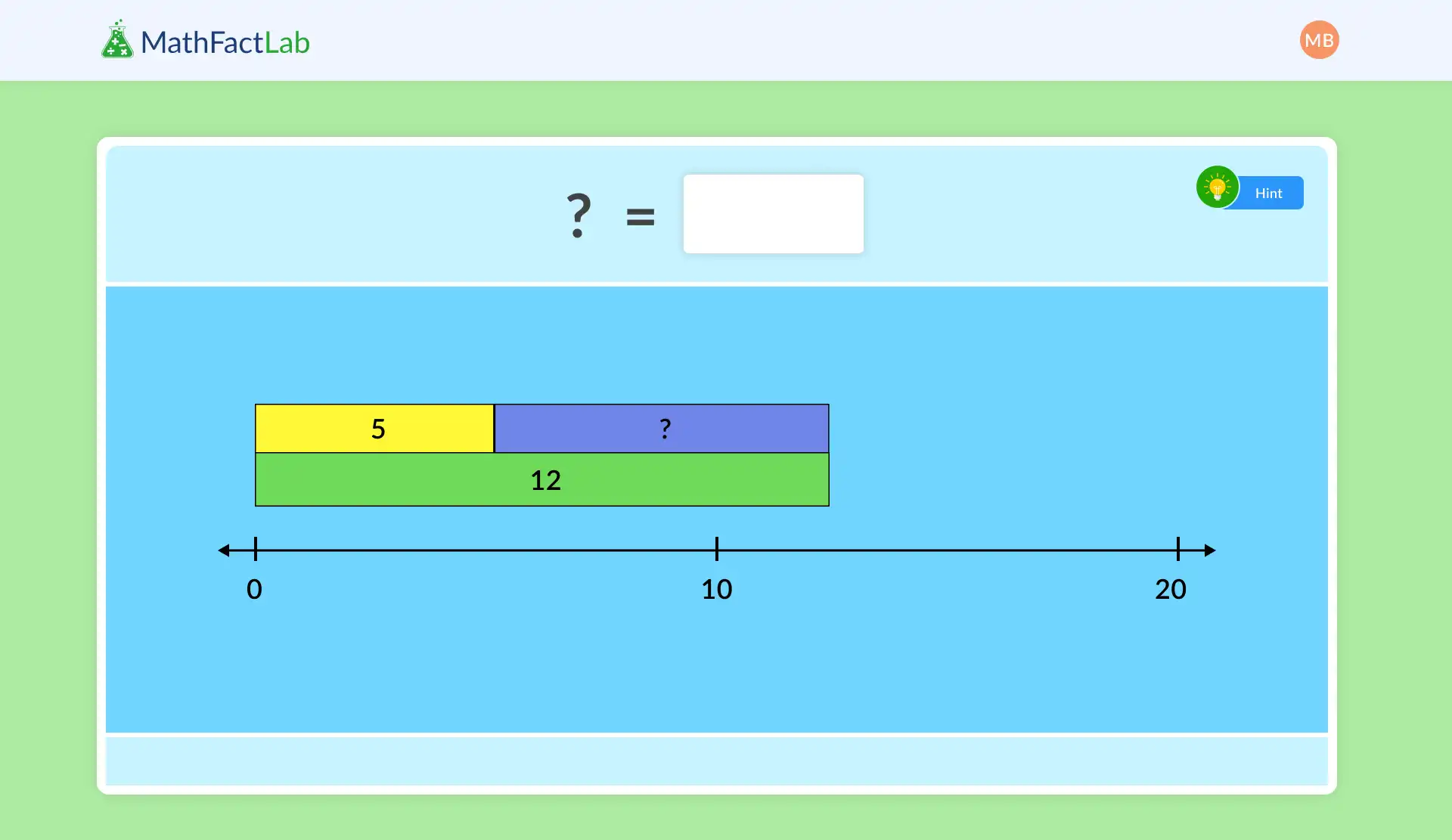
Subtraction maths fact modeled with a double bar diagram.
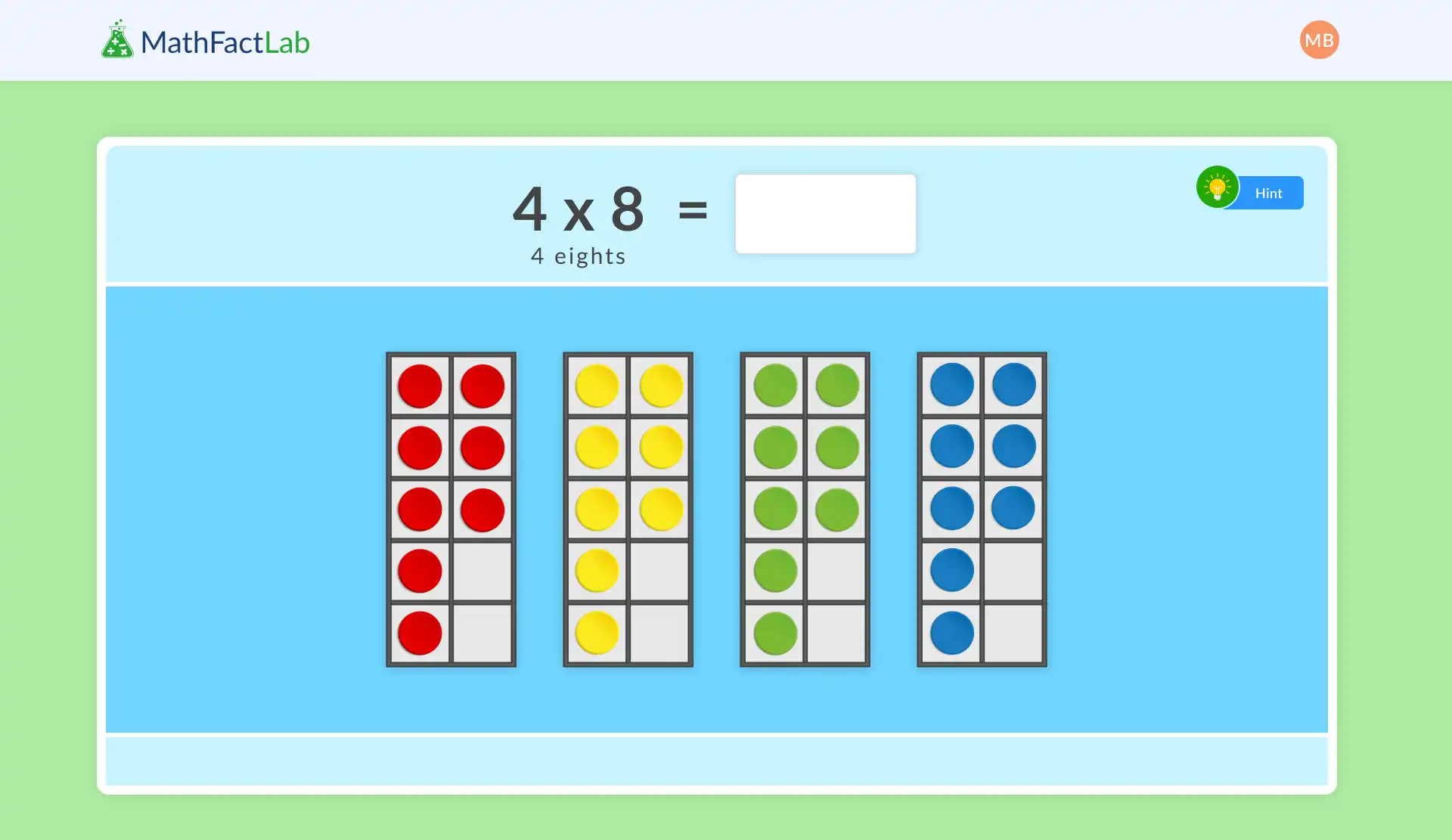
Multiplication maths fact modeled with four ten frames. 4 timestable.
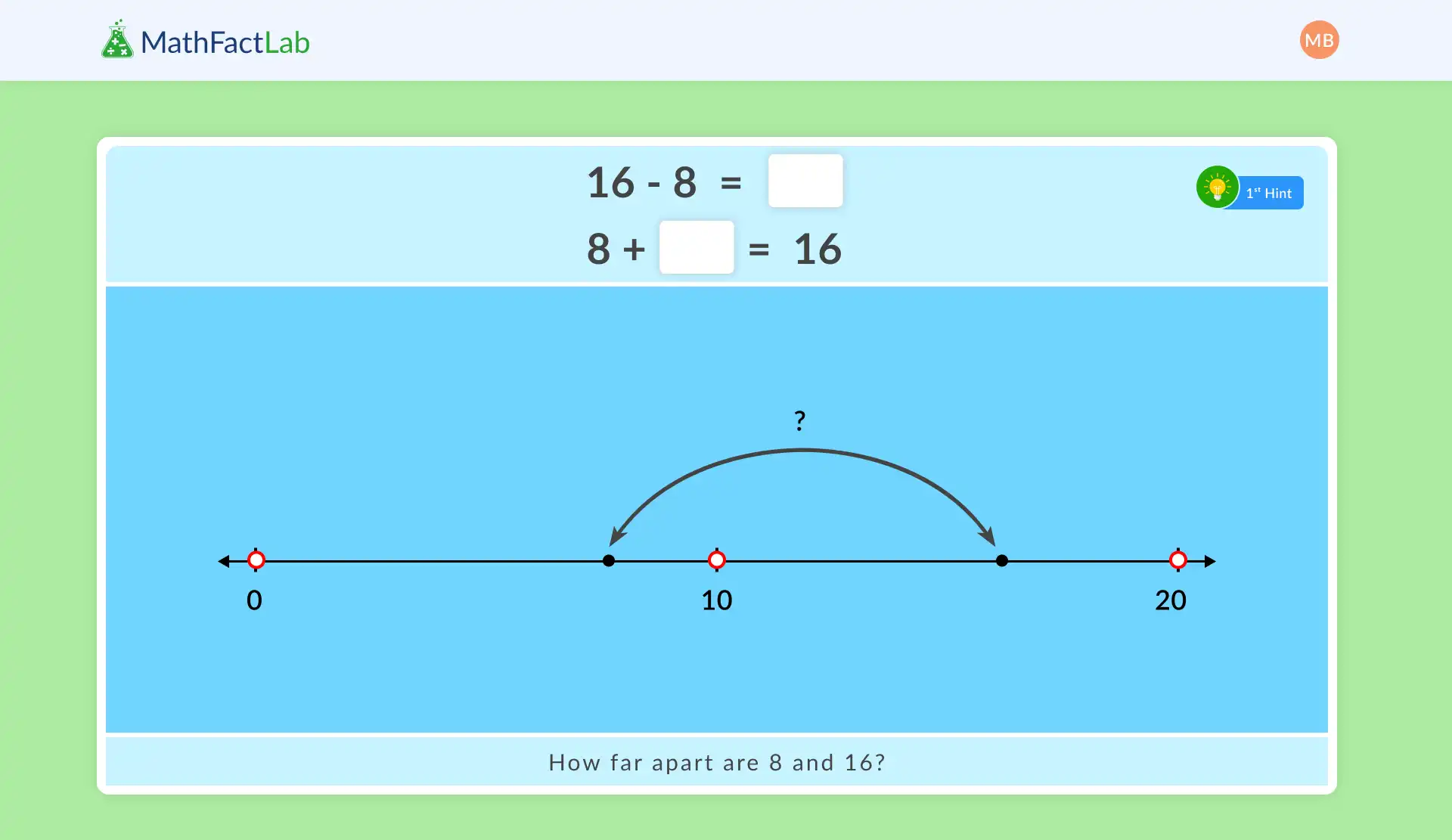
Addition and subtraction maths fact modeled on a number line.
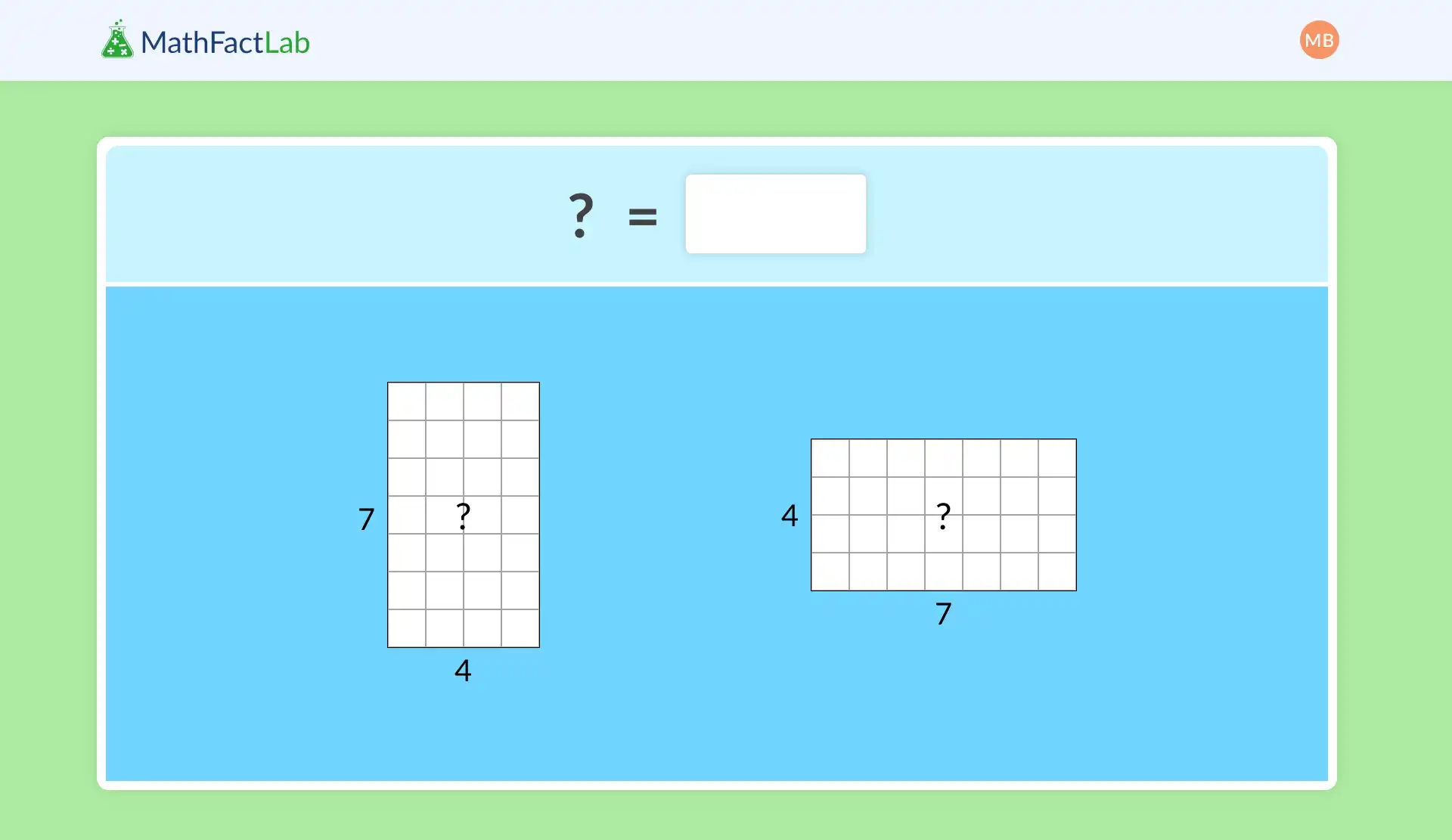
Division and multiplication number fact modelled with an open array.  7 timestable.
Multiplication number fact modeled with dice.
Multiplication math fact modeled with area models.
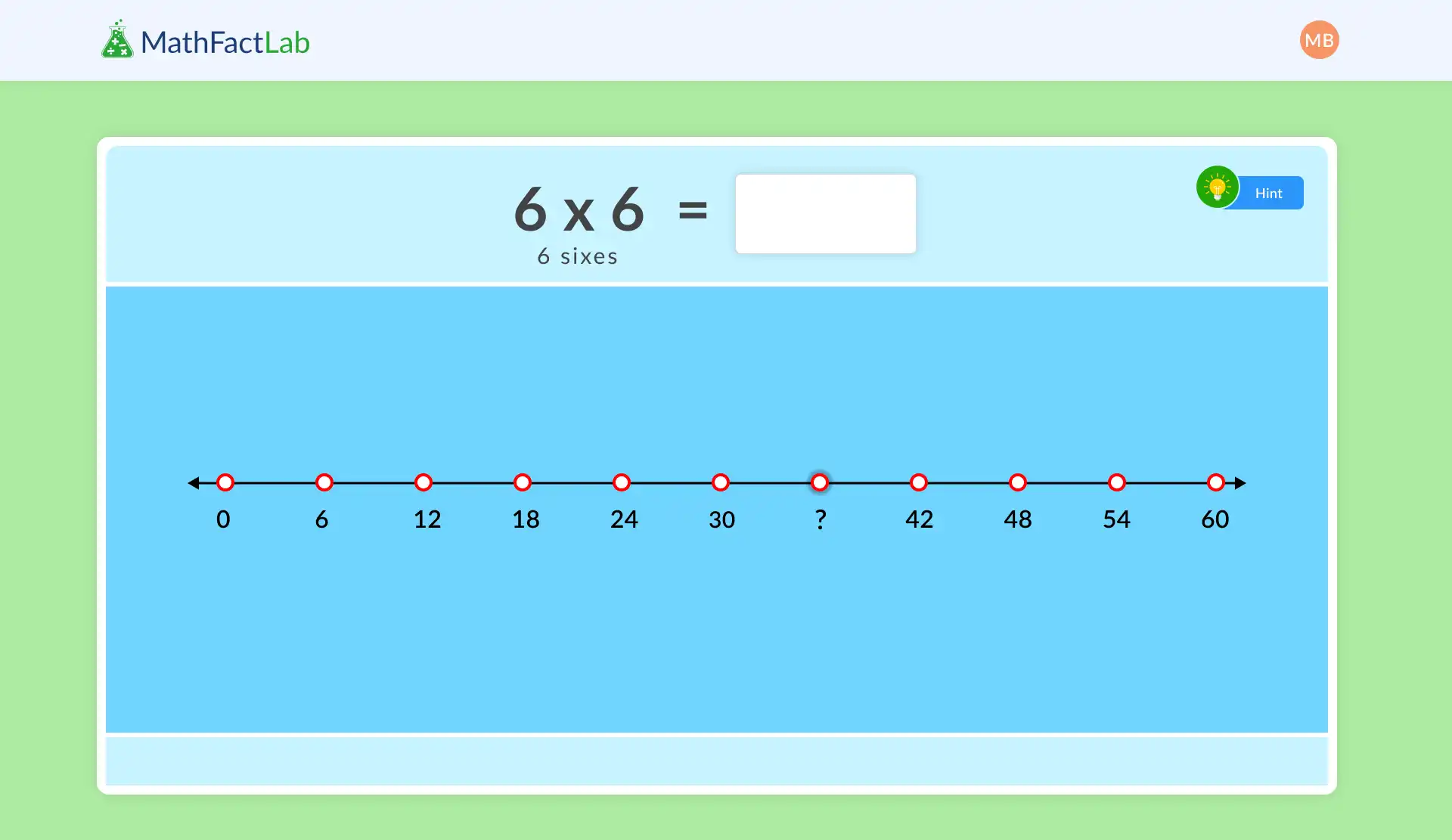
6 timestable represented on a number line.

Our Emphasis is on Understanding

At MathFactLab, we represent each of the basic maths facts with a variety of visual models. This helps students understand the numbers in multiple ways and recognize them as components of number fact families, whether they are working on addition, subtraction, multiplication, or division facts.
For example, as students practice mental computation and number fact fluency, they may see problems represented with number lines, dice, or open arrays. These strategies help students realize that they can construct new maths fact knowledge with previously mastered facts.
"We are a single-stream school in regional Australia and I wanted to write and say a massive thank you for creating the product you have. Our students have been growing so fast with their number facts that we have all agreed as a staff to commit to daily use of MathFactLab."

Anthony | Teaching and Learning Coordinator, Australia

Strategy-Based Maths Fact Fluency

Students working on addition and subtraction fact fluency will practice with ten frames, rekenrek beads, and double-bar diagrams. This helps them instantly see how addition and subtraction form number fact families, which greatly simplifies the process of learning basic facts.
Frequent exposure to these visual models helps students construct mental models and deepen their conceptual understanding of the basic operations. Division and multiplication facts suddenly become two sides of the same coin! All this helps to build a foundation for overall math fluency.
When Australian students regularly complete their maths facts practice online with MathFactLab, they begin to see the manifold patterns and relationships that interconnect the basic facts, leading to easier mastery and greater success in the classroom.
Maths teachers, whether your primary students are building fluency with addition number facts or mastering their times tables, MathFactLab will serve them well!
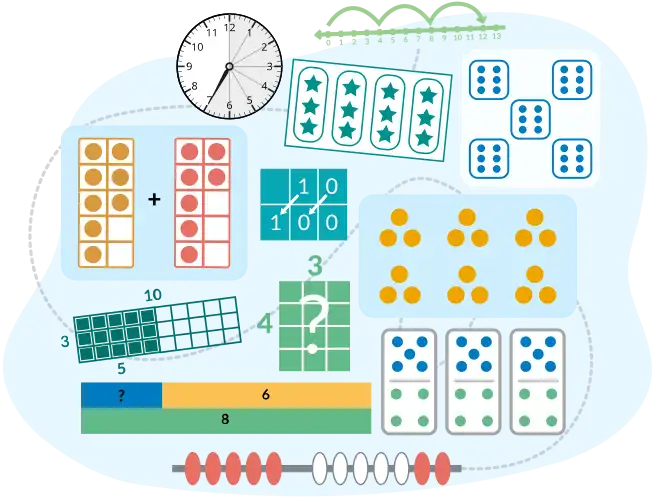
Collage of math learning tools including an analog clock showing 8:23, number blocks, dice, abacus, star cards, and a number line with addition and question marks.

You’ll Love MathFactLab

It's easy. Setting up your class is simple and straightforward.
Student practicing math facts.
Make accommodations to meet individual student needs.
MathFactLab reinforces your good classroom teaching with individualized, online math facts practice, developing a wide range of math concepts and skills.
MathFactLab pre-assesses students and places them appropriately within the math fact fluency program.
Easily monitor student progress at all grade levels with our intuitive teacher tools. Quickly see who needs extra practice or assistance.
Your students will take pride in their growth as they progress through the program.

What the Research Says

The best way to develop fluency with numbers is to develop number sense and to work with numbers in different ways, not to blindly memorize without number sense.
- Jo Boaler
Stanford University Professor of Mathematics Education and Co-Founder of You cubed, in her article Fluency Without Fear: Research Evidence on the Best Ways to Learn Math Facts
Many studies over many years have compared traditional basic fact instruction (i.e., drill) to strategy- focused instruction. All of them show that strategy groups outperform their peers on using strategies and on automaticity and accuracy.
- Jennifer Bay-Williams & Gina Kling
Math Fact Fluency: 60+ Games and Assessment Tools to Support Learning and Retention. citing research from Baroody, Pupura, Eiland, Reid, & Paliwal, 2016; Brendefur, Strother, Theide, & Appleton, 2015; Locuniak & Jordan, 2008; Purpura, Baroody, Eiland, & Reid, 2016; Thornton, 1978, 1990; Tournaki 2003
Mastery that underlies computational fluency grows out of discovering the numerous patterns and relationships that interconnect the basic combinations.
- Arthur J. Baroody
Professor Emeritus of Curriculum and Instruction, University of Illinois at Urbana-Champaign in his article Why children have difficulties mastering the basic number combinations and how to help them
Research supports the use of explicit strategy instruction as effective in helping all students learn (and remember) their basic math facts (e.g.,Baroody, et al., 2009; Baroody, et al., 2016; Thornton, 1978; Fuson, 1992; Rathmell, 1978; Thornton & Toohey, 1984).
- John A. Van de Walle, Karen S. Karp & Jennifer Bay-Williams
In Elementary and Middle School Mathematics: Teaching Developmentally, 2019