Double-Digit Multiplication Word Problems Worksheet Free pdf
August 28, 2025
4
minute read
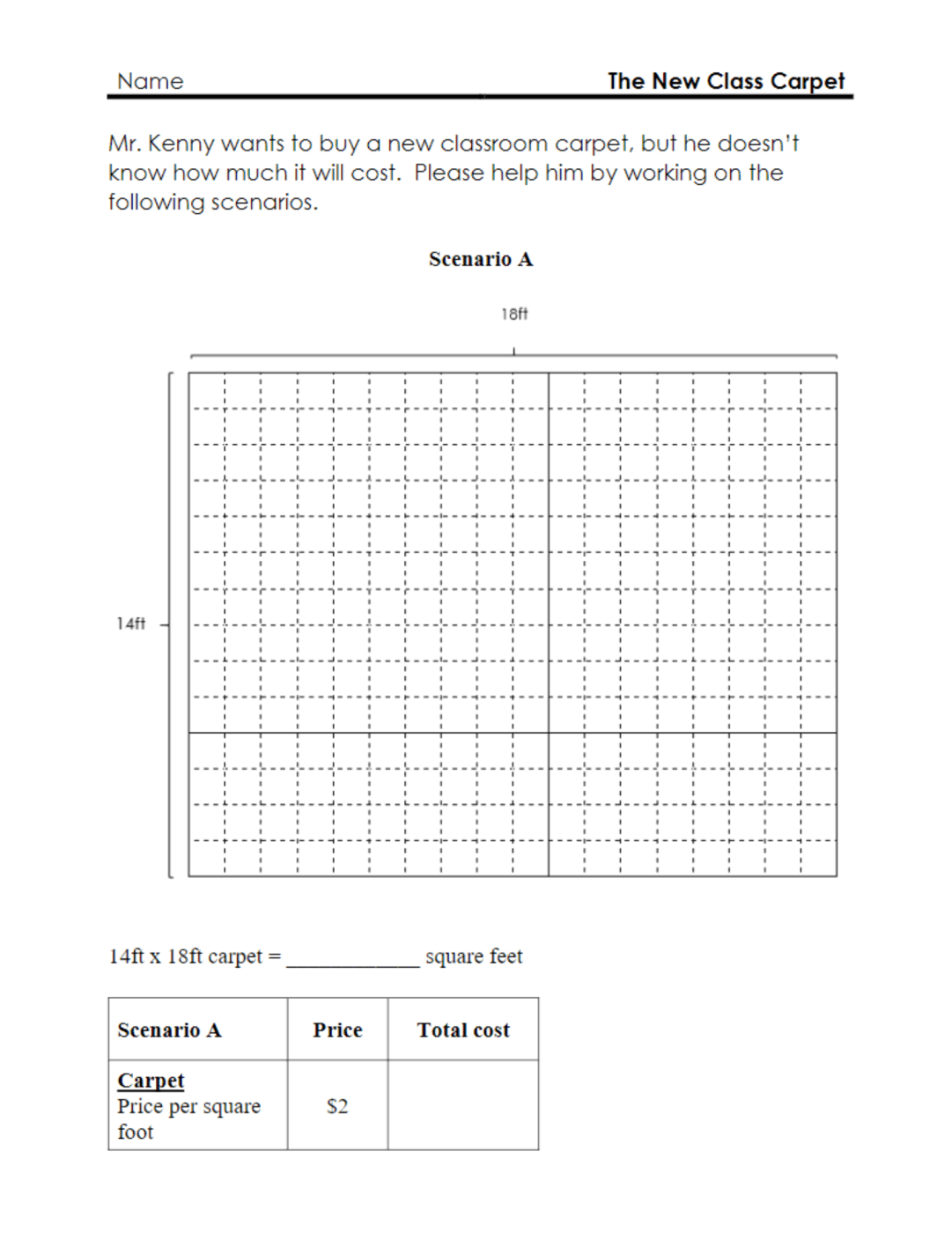
This is one of my favorite resources for helping my student to develop proficiency with 2-digit by 2-digit multiplication, also known as double digit multiplication. I've been using it - and refining it - for several years now. There are six levels of problems, each one more challenging than the next, all based on the idea of a teacher buying a new class carpet (or rug).
MathFactLab is, of course, dedicated to the strategic teaching of addition, subtraction, division and multiplication facts, but, as a fifth-grade teacher, there is much more that I do beside teaching math fact fluency. With this blog, I enjoy the opportunity to share my favorite materials that I have produced for my students over the years.
The New Class Carpet:
A Set of Double-Digit Multiplication Tasks
There are six scenarios in this packet, each representing a different carpet that I might buy for the classroom. Each carpet is a different size and has been represented by an area model. I don't require the students to use the area model for calculating, but it is helpful to some and becomes helpful to many when they are trying to figure out how to calculate the carpet's price.
I start by introducing this lesson with a square foot of carpet that I got from a local carpet store, explaining that carpet is purchased and priced by the square foot. Knowing the dimensions of the carpet you are ordering is necessary to determining the price. I also talk about the fact that carpeting often has padding underneath and, this too is priced by the square foot. I then explain that unless it is wall-to-wall, carpeting tends to have edging to keep from fraying, and edging is priced by the linear foot. This actually tends to be the more challenging part of the conversation as perimeter is not a typical focus for students this age.
With the intro behind them, the first job of the students is to find out the square footage of all the carpets. Some students only get this far. After I have checked the accuracy of their calculations, they are then allowed to begin the process of pricing. The pricing begins very simply - $2 per square foot - and gets more challenging with each scenario.
You will see that many of the prices in this packet are not whole dollar amounts. While this set of problems could be given later in the year when decimal multiplication has been taught, I like to give it early in the year when we're still just warming up with whole numbers. I help my students look for ways to work around the decimals. For example, when the padding is $0.50 per square foot, I ask how much two square feet would be, and they realize they can think in twos to avoid the decimal.
When the price is $0.99 per square foot, they can think $1 and then use compensation. I want my students to be creative, flexible mathematicians, and the best way to do this (I think) is to give them solvable problems where they don't fully have the tool set to solve efficiently. Just like at home or in the kitchen - when you have a job or recipe where you are lacking the perfect tool or ingredient, you work around it creatively.
Don't expect your students to get through all of the packet. Pricing two or three carpets provides plenty of challenge for most, but for those who need more, you'll find this packet will meet their needs. Enjoy.
Conclusion
Double digit multiplication practice need not be dull. This unit is one of my favorites each year because there are so many opportunities to present creative, real-world multi-digit multiplication practice problems that can get kids excited. The area models make this accessible to struggling students while the pricing of the latter scenarios creates plenty of opportunity for those need a challenge. I hope this packet meets your students needs.